
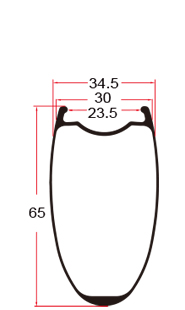
Carbon road wheels built with A-grade, 4D-drilled T700/800 carbon rims, featuring a 23.5 mm internal width and shallow hook. Available in 42, 45, 50, 55, 60 and 65 mm rim depths, they are built with mixed Sapim CX-Ray / CX-Sprint spokes and our 260g ultra-light dual ratchet road hubs. (DT180 hub is 280g /pair ) Wheelset weights range from 1250g to 15000g per pair. The rims include a pressure-release hole to ensure a safe tubeless tire setup. The shallow hook allows for safe tube and tubeless tire installation—with a minimum tire size of 700x28mm—while providing a smooth tire-to-rim transition for optimized aerodynamics.
AERODYNAMIC
The Science of Speed: Why Real-World Reliability Beats Wind-Tunnel Hype When prestigious European cycling publications like Tour magazine put modern carbon wheelsets through rigorous wind-tunnel testing—including everything from legacy European brands to budget-friendly direct-to-consumer alternatives—the results often reveal something fascinating: virtually all high-grade and mid-tier wheels cluster within a tight fraction of a percent of one another. When aerodynamic drag is that neck-and-neck, the microscopic gaps often fall well within standard testing error margins. CFD modelling and U-shape rim profiling have matured to a point where basic, efficient aerodynamics are no longer exclusive or patented. So, if wheels perform so similarly in a pristine laboratory tunnel, how should riders actually choose?
Real-World Variables vs. Laboratory Tunnels. A wind tunnel measures efficiency at fixed yaw angles under ideal conditions. But out on the open road, riders face shifting crosswinds, turbulent group riding dynamics, and varying speeds. In practical riding conditions, microscopic laboratory gains easily wash out, meaning paying over double for a famous brand name to chase a 0.5% variance is hard to justify.
The Keyboard Spec Sheet: Why Major Brands and DTC Outfits Invent Their Wheel Weights
In the modern cycling industry, marketing departments live and die by the spec sheet. But if you have ever unboxed a brand-new set of wheels, thrown them onto a scale, and watched the numbers exceed the manufacturer's claims by 50 to 100 grams, you are not alone.
Across both legacy Western and high-volume direct-to-consumer (DTC) brands, a quiet truth dictates the market: the weights printed on product pages are often works of fiction.
The Tiered Keyboard Game
Different segments of the industry play the weight game differently, but the underlying mechanism is the same—subtracting mass with a few keystrokes rather than in the manufacturing plant.
- The Big-Brand Padding: Large, legacy manufacturers know their customers buy based on brand prestige and perceived safety, but they still feel the pressure to look competitive on paper. They take a heavy, ruggedly overbuilt 1,500g wheelset, shave off 100g with a keyboard to get it into the 1,400g bracket, and let their marketing legacy do the rest.
- The DTC Scale Race: Direct-to-consumer and budget house-brand outfits live and die by the digital spec sheet. Fighting an aggressive online battle where every single gram dictates sales, a wheelset that genuinely scales out at 1,300g is boldly advertised as 1,200g. They rely on the reality that most consumers will never return wheels to them due to high costs.
- The Bikepro Standard: At Bikepro, we require grounding every build in actual bench weights subject to a tight, honest 1% to 2% tolerance. An honest scale weight might not win an online spec-sheet beauty contest against a fictional baseline, but it ensures the wheel actually delivers structural integrity, reliable power transfer, and the durability to survive the real world.
The Road Wheel Sweet Spot: Why 23.5 mm Internal Width Wins on Aero, Weight, and Safety
For the past few years, the bicycle wheel industry has been locked in a polarizing design war. On one side, high-volume direct-to-consumer (DTC) brands have clung to narrow 21 mm internal widths just to win the marketing race on the shop scale. On the other, prominent Western brands have aggressively pushed ultra-wide 25 mm internal profiles, claiming they unlock the ultimate aerodynamic and rolling efficiency.
However, as the professional peloton moves universally toward wider rubber, real-world road racing physics have exposed the flaws of both extremes. For riders running 28 mm to 30 mm tyres, 23.5 mm internal width is the true engineering sweet spot—the only profile that seamlessly balances aerodynamics, rotational weight, and critical structural safety.
1. The Peloton Reality: Nominal vs. Measured Width
Wider road tyres are no longer a passing trend; they are the established standard. In top-tier road racing, bikes average a massive 30.8 mm measured tyre width, with 30 mm nominal tyres fast becoming the baseline. The engineering challenge lies in how a tyre's shape changes depending on the rim bed it sits on:
- Traditional 21 mm Rim: A 30 mm tyre is pinched onto a narrow bed, forcing the casing into a bulbous "lightbulb" shape. This overhang creates a muffin-top profile over the rim edge, fracturing airflow and destroying aerodynamic efficiency.
- Extreme 25 mm Rim: This width forces riders into an impossible trade-off between safety and aerodynamics:
- With a 28 mm tyre: You are pushed right to the safety limit. The casing is stretched flat, pulling the sidewalls nearly vertical and leaving almost zero protective overhang to shield the rim from impacts.
- With a 30 mm tyre: While the tyre gains enough volume to sit safely on the bed, it balloons out to 33–34 mm in actual measured width—creating a massive aerodynamic penalty unless paired with an impractically wide, heavy rim.
- The 23.5 mm Sweet Spot: Both 28 mm and 30 mm tyres scale proportionally. A nominal 30 mm tyre inflates cleanly to roughly 31 mm, preserving a protective sidewall curve while keeping a smooth, uninterrupted transition to the rim wall.
2. The Aero and Weight Trade-Off (The Rule of 105)
To make a 30 mm tyre on an ultra-wide 25 mm internal rim aerodynamically effective, engineers must obey the Rule of 105—the aerodynamic principle dictating that a rim's external width must be at least 105% of the inflated tyre's actual width to keep airflow smoothly attached.
Because a 30 mm tyre stretches to 33–34 mm on a 25 mm internal rim, the external rim width must exceed an absurd 36 mm just to remain aerodynamically compliant. Building a carbon rim that massive requires excessive composite material, introducing a heavy rotational weight penalty that cancels out any marginal rolling resistance gains. Conversely, keeping the rim narrower leaves the 34 mm tyre mushrooming into the wind, ruining aerodynamics.
A 23.5 mm internal width solves this equation cleanly. Because a 30 mm tyre inflates to roughly 31 mm, engineers can pair it with a sleek, lightweight 33–34 mm external profile. This easily satisfies the Rule of 105, delivering low-drag performance without bloating the wheelset's weight.
3. The Forgotten Danger: Rim Protection on 28 mm Tyres
While the industry heavily markets the plush comfort of running ultra-low pressures (50 to 55 PSI) on 25 mm internal rims, it rarely mentions the severe structural vulnerability created when pairing them with popular 28 mm road tyres: the loss of rim protection.
Stretching a 28 mm tyre casing across an overly wide 25 mm bed pushes the setup to its mechanical limit, triggering two dangerous shifts simultaneously:
- Vertical Collapse: Stretching the tyre laterally shrinks its vertical height. The distance between the road surface and the sharp edge of your carbon rim drops to a critical minimum, leaving a flattened profile with far less air cushion.
- Nearly Vertical Sidewalls: The tyre sidewalls lose their rounded, shock-absorbing curve and pull almost completely straight. With virtually no tyre overhang, the rubber no longer shields the outer edges of the rim.
If you hit a pothole, sharp rock, or railway track at speed, a low-pressure, straight-walled 28 mm tyre will instantly bottom out. With no rubber bulge to deflect the blow, the obstacle punches straight into the bare
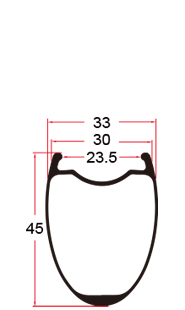
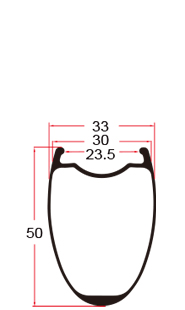
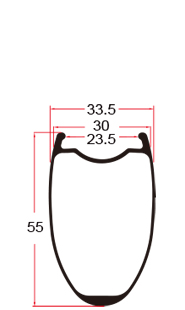
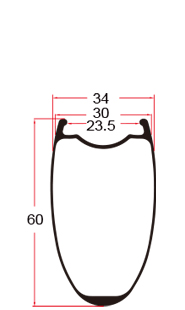
430g
450g
Why We Don’t Build With Superlight & Hookless Rims: The Engineering Reality of Durability and Real-World Performance. In the modern cycling industry, the pursuit of lower weight on a shop scale often overshadows what actually matters out on the open road. When looking at spec sheets, ultra-light carbon rims can look exceptionally tempting. However, as an experienced wheelbuilder & rider who prioritizes long-term reliability and true performance over marketing hype, I make a deliberate choice not to use superlight carbon rims. As one of my customers—a multi-world champion—powerfully put it: "Lateral & torsional rigidity is the key of a good wheel." That single statement captures the ultimate truth of high-performance wheel, and it is precisely why chasing scale-only weight savings falls short. Mass-market brands often rely on generalized, one-size-fits-all overbuilding. By contrast, our custom wheels are significantly lighter than standard Western brand alternatives because they are meticulously tailored directly to each rider's specific weight, power output, and riding expectations. Shaving every last gram off a rim bed forces manufacturing compromises that ultimately degrade how a wheel handles, performs, and survives the real world.
1. Structural Compromises: The Danger of Thin Carbon Layups To hit aggressive, headline-grabbing weight targets, manufacturers often have to resort to dropping essential carbon plies or thinning out the laminate right where structural integrity matters most. This structural sacrifice creates severe vulnerabilities: Impact Resistance: A thinner carbon layup loses the critical impact absorption needed when hitting a sharp pothole or rock at speed, drastically increasing the risk of delamination or catastrophic wall cracking. Tension Stability: The rim bed must handle immense, constant outward radial force from high-spoke tensions. Thinning out the laminate compromises the nipple bed's ability to resist pull-through under high load. Tubeless Safety: A robust wall thickness is essential for maintaining a safe, secure bead hook and handling the internal pressures of tubeless setups reliably over years of riding.
2. The Response Deficit: Why Superlight Rims Feel "Dead" Under Power When a wheelset is built too light, the lack of responsiveness is a direct consequence of a compromised carbon layup. True performance requires maintaining massive, stable spoke tensions and structural stiffness to achieve the elite-level rigidity champions demand. Without enough material, the wheel suffers from: Torsional Wind-Up: Without enough structural material in the rim and proper hoop stiffness, the rim twists under heavy pedal torque. Instead of immediately translating your leg power into forward acceleration, energy gets wasted as the structure winds up. Lateral Flex: When the nipple bed lacks sufficient laminate thickness, the rim bows sideways under high-load cornering or out-of-the-saddle sprinting, creating a vague, unresponsive feel. Loss of Snap: Over-minimized, paper-thin rims lose that crisp, instant response because the structure simply lacks the integrity to rebound cleanly under high-wattage inputs. The Bottom Line Prioritizing structural safety, power transfer, and long-term durability over chasing marginal, scale-only weight savings makes all the difference for a wheelset that can actually survive the real world. By utilizing meticulously engineered carbon profiles—such as the B'Spoke Carbon Road Wheels—we ensure every wheel maintains the uncompromising lateral and torsional rigidity required to instantly respond the second you drop the hammer, without folding under power.
The Hookless Rim Hazard: Why True Bead Security and Manufacturing Integrity Matter for Road Cycling
In the relentless pursuit of lower manufacturing costs and weight-saving spec sheets, a major design trend has swept through the carbon wheel market: hookless rims (straight-side rims). Promoted heavily by legacy Western brands, hookless systems eliminate the hook that secures a tire bead, replacing it with a straight vertical wall.
While hookless rims are a profitable shortcut for manufacturers, they introduce severe safety compromises for real-world road and gravel riding.
1. The Physics of Retention: Why Hooks are Essential for High Pressure
Traditional hooked rims feature an internal mechanical return ( hook ) that curls inward to physically lock the tire bead in place. When a high-pressure road tire is inflated to 60, 70, or 80+ PSI, immense outward radial force presses against the rim walls.
- The Hooked Advantage: The internal hook acts as a mechanical anchor, holding the tire bead securely in place even under high pressures, hard cornering forces, and impacts.
- The Hookless Flaw: Hookless rims rely entirely on tight manufacturing tolerances and friction between the carbon wall and the tire casing to keep the tire from unseating. Without a physical mechanical lip, any drop in pressure, sudden side impact, or high-load cornering can allow the tire bead to slip inward toward the center channel.
2. The Danger of Blowouts and Sudden Unseating
The most alarming consequence of hookless road rims is the risk of catastrophic unseating. When a tubeless road tire burps air or suffers a rapid pressure loss on a hookless rim, the lack of a mechanical retaining hook means the bead can instantly detach completely from the rim bed.
- If a rider is descending a mountain pass or carving through a high-speed corner when a hookless tire unseats, the result is an immediate loss of control, bare metal scraping the tarmac, and a severe crash hazard.
- In contrast, a properly hooked rim with an internal return keeps the tire bead captured even if pressure drops significantly, allowing the rider to brake safely to a stop.
3. The Tire Compatibility Minefield
Hookless rims enforce strict, inflexible dimensional standards between the tire manufacturer and the rim maker.
- Many riders are unaware that hookless systems require specific, heavy-duty sidewall reinforcements and strict maximum pressure limits (often capped strictly at 72 PSI / 5 bar by ETRTO standards).
- If a rider mounts a standard tubeless tire that lacks a reinforced hookless-compatible bead, or if they accidentally inflate past the low pressure ceiling during a roadside repair, the risk of the tire blowing off the rim entirely multiplies exponentially.
4. The Real Agenda: Western Outsourcing, Mold Complexity, and Profit Margins
Why did hookless take over so much of the market? The answer exposes the dirty secret of modern carbon manufacturing.
- The Western Skill Gap: Decades ago, Western legacy brands outsourced their composite manufacturing to Asia to chase cheaper labor, systematically hollowing out their own domestic tooling and skilled manufacturing base. Today, the skilled composite workforce required for precision rim building is almost non-existent in the West, residing almost entirely in manufacturing centers like Xiamen, China.
- The Layup and Mold Complexity: Manufacturing a proper hooked carbon rim is demanding artisan work. Technicians must place and wrap the carbon bead and internal plies exceptionally carefully during the layup around a multi-piece segmented mold where internal metal forming blocks bolt together. After curing, those parts must be disassembled piece-by-piece from the inside out. In contrast, a hookless rim uses a simple 4-piece split mold that pulls apart instantly with zero internal complexity.
- The Copycat Trap: Instead of admitting they lacked the advanced tooling and specialized composite labor required for hooked rims, Western brands marketed hookless as "innovation." Tragically, many chinese manufacturers blindly followed the trend to chase export orders,
- The Margin Discrepancy: By slashing manufacturing labor, avoiding complex layup precision, and eliminating intricate tooling, brands produce hookless rims much more cheaply, yet sell them at premium price points. They turned a manufacturing limitation into a massive profit margin—shifting all the structural risk and safety compromise directly onto the end consumer.
Conclusion
Manufacturing savings and simple 4-piece molds should never compromise rider safety. High pressure road 7 gravel wheel requires a zero-tolerance approach to structural reliability. By insisting on precision-engineered hooked rims —such as those featured on our B'Spoke Carbon Road Wheels—you guarantee a secure tube & airtight tubeless interface, eliminate the terrifying risk of sudden tyre blowouts, and retain the freedom to ride hard with absolute confidence.
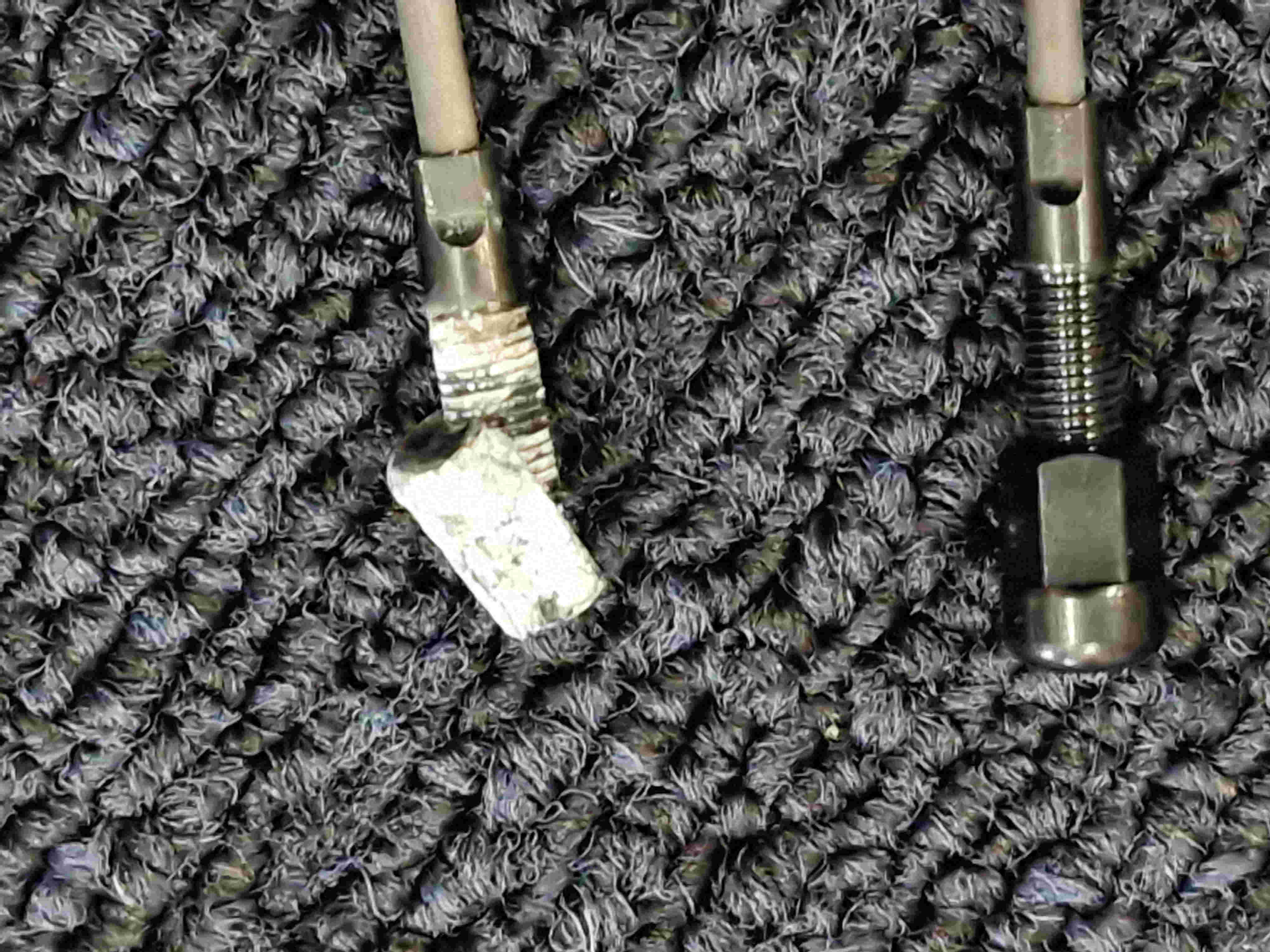
Galvanic Corrosion Failure of an Aluminum End-Bit on a Carbon Spoke
HUB
The Enduring Brilliance of Classic Engineering: Why We Stick With Twin-Ratchet Hubs In an industry constantly chasing the next proprietary standard, it’s easy to assume that newer automatically means better. DT Swiss faced an influx of alternatives once their core star-ratchet patents expired, they rushed to redesign their internals—introducing fixed rings and single-ratchet EXP systems to create new patents and shave a fraction of a gram. But for high power output road riders who measure performance in reliability rather than marketing hype, chasing novelty often introduces unnecessary complications. Here is why our custom wheelsets proudly stick to the proven, old-school Hugi-derived twin-ratchet system—and why it represents the peak of real-world durability.
1. Self-Aligning vs. Fixed: The Physics of True Engagement The classic design relies on two identical, floating ratchet rings pushed apart by independent springs. Because both ratchets are completely free-floating, they dynamically self-align against each other under high torque and axle flex, ensuring full-face, symmetrical tooth contact. By contrast, newer fixed-ring systems anchor one ratchet rigidly into the hub shell. Under heavy power delivery or loaded descents, microscopic frame and axle flex can cause uneven face-to-face contact. The classic dual-floating setup avoids this entirely, guaranteeing 100% engagement when you drop the hammer.
2. Trail-Side Simplicity That Can't Be Beat When you are hundreds of kilometers from the nearest bike shop, complexity is the enemy. Classic Twin-Ratchet: You can pull the freehub body off completely bare-handed, wipe down and grease the floating rings, and snap it back together trail-side in under a minute with zero proprietary tools. Modern Proprietary Designs: Many newer lightweight hubs require specialized factory tools just to access and service the internal threaded components.
3. Avoiding the "Big-Brand Tax" When you pay extra for heavily marketed global brand names, a massive chunk of your money goes toward corporate overhead and global licensing rather than raw mechanical substance. By using expertly manufactured, open-platform hub architectures, every dollar you spend goes directly into what matters
The Smart Rider’s Choice True durability isn't about collecting brand-name decals or adopting the latest patent just because it's new. By sticking with a time-tested, fully self-aligning twin-ratchet system, you get a hub that is infinitely serviceable, completely dependable under massive torque spikes, and engineered to outlast the hype.
4. Long-Term Parts Availability & Universal Cross-Compatibility
Sticking with the classic, open-platform Hugi-derived twin-ratchet architecture ensures that replacement parts, floating star rings, springs, and freehub bodies remain readily available for years to come. You are never locked into closed, proprietary manufacturer ecosystems or left stranded when a single brand decides to discontinue a model-year specific part.
SPOKE COUNT & LACING PATTERN
The Real-World Physics of Modern Wheelbuilding: Why Durability Beats Marketing Hype Introduction: The Clash Between Spec-Sheet Hype and Real-World Physics In the modern cycling industry, marketing departments are obsessed with chasing headline-grabbing numbers. Whether it is ultra-low spoke counts, featherlight extreme rim profiles, or exotic radial carbon spokes, the trend toward minimalism is everywhere. However, for builders and riders who prioritize real-world reliability, structural mechanics, and safety over scale-only weight savings, many of these trends represent a dangerous engineering compromise. True performance requires maintaining massive, stable spoke tensions and structural stiffness to achieve elite-level rigidity. As experienced builders know, "Lateral & torsional rigidity is the key of a good wheel."
1. The Spoke Count Debate: Why 24/24 is Non-Negotiable for Disc Brakes In the traditional rim-brake era, building a 20/24 hole wheel was a common and balanced choice. Because rim-brake front wheels are completely symmetrical and braking forces are shared evenly across both sides of the rim, lower spoke counts could get away with better triangulation. Disc brakes completely rewrite these engineering rules: Asymmetric Braking Forces: Every time you clamp a disc rotor, massive rotational stopping force is concentrated entirely on one side of the hub shell, transferring torsional stress directly across the spoking pattern. Torsional Wind-Up: Under heavy disc-braking torque and out-of-the-saddle sprinting, a 20-hole lacing pattern lacks the bracing connections needed to prevent wind-up and lateral deflection. Sticking to a robust 24/24 configuration ensures that torsional and lateral rigidity stay locked in under hard cornering and heavy braking.
2. The Dangers of Radial Lacing and 2-to-1 Patterns with Disc Brakes : Aesthetics often override physics in factory wheel design, leading to flawed lacing geometries that fail under real-world loads: Radial Carbon Spoke Hazards: While carbon fiber has high tensile strength, it is exceptionally weak against shear and bending forces. Radial lacing provides zero torsional path or diagonal triangulation. Every bit of torque must twist the hub flange directly against straight, non-triangulated spokes, creating severe fatigue risks at the anchor points.
The Fallacy of 2-to-1 Lacing on Disc Wheels: While 2-to-1 patterns (pairing two drive/braking spokes to one opposing spoke) help balance wheel spoke tension, they are a major safety hazard for disc setups. Even on the non-disc side of a front wheel, braking creates a heavy rotational component. Without proper diagonal triangulation, the hub flange twists relative to the rim under braking, causing spongy lever feel and severe fatigue mismatches.
Conclusion : Marginal weight gains should never come at the cost of structural integrity. By rejecting brittle shortcuts like ultra-low spoke counts, radial carbon lacing, and compromised 2-to-1 patterns, we can deliver setups that outlast the hype, handle predictably under immense torque, and survive the punishing realities of the open road.
Tube or Tubeless
1. The Legacy of Tubulars and Cornering Confidence
Long before the modern era of carbon clinchers, tubular tires (sew-ups) were the absolute bedrock of road racing. Because the tire casing is completely sewn closed around the inner tube with a tight cotton or silk fabric and glued securely across its entire base tape to the rim bed, it behaved entirely differently during a puncture. If a rider suffered a flat mid-corner, the tire would not lose all its pressure instantly or unseat from the rim. The stitched carcass and adhesive bond allowed riders to negotiate out of bends safely, and many legendary races were successfully finished on punctured tubulars.
Transitioning to clinchers changed that physics entirely. Standard clinchers lacked that mechanical security, meaning a mid-corner puncture often resulted in the tire unseating and the bike instantly riding on bare metal. That lack of a safety net created a psychological hesitation, making it difficult to ever commit 100% to a high-speed corner again.
2. The Evolution of Tubeless and the "Schwalbe One" Era
When tubeless tires first entered the market, early adopters found a modern revival of that classic tubular feel. The original Schwalbe One was widely praised because it behaved like a car tire—supple, puncture resistant, and absorbing micro-roughness in the road. However, subsequent editions chased lower weight figures by thinning out casings and plies, leading to frequent punctures and a loss of that robust ride quality.
Modern heavy-duty endurance race tires (such as the Continental GP5000 AS TR and the Vittoria Corsa Pro Control) have completely eliminated that compromise. By combining low-hysteresis racing casings with reinforced tread breakers and sidewall protection, they give riders top-tier speed and suppleness without sacrificing the durability needed to survive harsh open-road conditions.
Today: almost all Tour de France riders use tubeless systems exclusively because they offer superior speed and efficiency compared to traditional tubulars and clinchers. By eliminating case to tube friction, zero hysteresis losses from an inner tube and a tighter fit, tubeless provides the highest performance tier available today, backed by independent data from platforms like Bicycle Rolling Resistance.
3. The "Shein" Business Model and Market Gimmicks
Despite the high performance of proper tubeless setups, the broader market has been flooded with mass-market shortcuts. Many low-cost or direct-to-consumer brands rely on sponsored YouTube influencers to hype up ultra-light components—mirroring a fast-fashion "Shein" business model. Similarly, the widespread adoption of TPU tubes has made them mainstream due to light weight, despite being slower and less secure than proper tubeless systems.
4. Engineering Pitfalls of Early Tubeless Rims
First-generation tubeless carbon rims with narrow 19mm to 21mm internal widths suffered from critical structural flaws:
- The Tape Bridging Problem: Narrow, deeply curved channels forced tubeless tape to bridge across gaps rather than laying flat, leading to air leaks under pressure.
- The Valve Base Pinch: The narrow base left no flat area for a tubeless valve rubber grommet to seat properly, causing constant sealing issues.
- Missing Safety Vents: A lack of dedicated air-release safety holes allowed stray air to pressurize the hollow carbon chamber, risking structural delamination.
- Hookless RIms : As I mentioned earlier
5. Dual Compatibility: Engineered for Both Tube and Tubeless
Wheel manufacturers should never force a rider to choose between tube and tubeless. Our carbon road wheels featuring a 23.5 mm internal width and shallow hook—are built to seamlessly accommodate both traditional inner tubes and tubeless tire setups.
By incorporating a precision-engineered shallow hook alongside a dedicated pressure-release safety hole, these rims ensure a secure, airtight seal for tubeless setups while providing a smooth tire-to-rim transition and easy installation for riders who prefer running standard tubes.
The B'Spoke Build Protocol
Every hand-built wheel that leaves our workshop relies on a rigorous, uncompromised mechanical protocol. While modern factory wheels are rushed through automated assembly lines, a true high-performance wheel requires absolute precision at every single stage of production—from wire preparation to organic stabilization.
Below is the core three-step engineering blueprint governing our custom builds.
1. Phil Wood Spoke Cutting & Cold-Forging
We use the legendary Phil Wood Spoke Cutting and Threading Machine to custom-cut and thread every spoke in-house.
- The Physics of Rolled Threads: Bicycle spoke threads must never be cut by removing material, which creates structural weakness and stress risers. The Phil Wood machine uses precision dies to cold-forge the metal, displacing and compressing the grain structure to form clean, uniform threads.
- Beyond the Standard 9mm Thread: While standard commercial spoke machines roll a typical 9mm thread length, our in-house setup extends this to a deep 10mm thread bed. Because high-grade stainless steel spokes can elongate by up to 2mm under high operational tension, our extended 10mm thread profile ensures the nipple can track fully down the spoke without ever running out of thread or bottoming out.
2. Specialized Spoke Preparation & Chemistry
We completely reject improper assembly habits, such as leaving threads completely dry (leading to quick tension loss) or using permanent threadlockers like Loctite 263 / superglue (which seizes nipples and makes future truing impossible). Instead, our thread chemistry adapts to the build type:
- Wheelsmith Spoke Prep (Pro Builds): For high-end performance builds using lightweight spokes (such as Sapim CX-Ray), we apply a custom-thinned formulation of Wheelsmith Spoke Prep. Applied via capillary action and dried under natural sunlight, it leaves a rubbery, elastic mechanical barrier that acts as both a gentle thread-locker and a vital lubricant. This lubricant completely eliminates destructive spoke wind-up during tensioning while allowing precise multi-day adjustments.
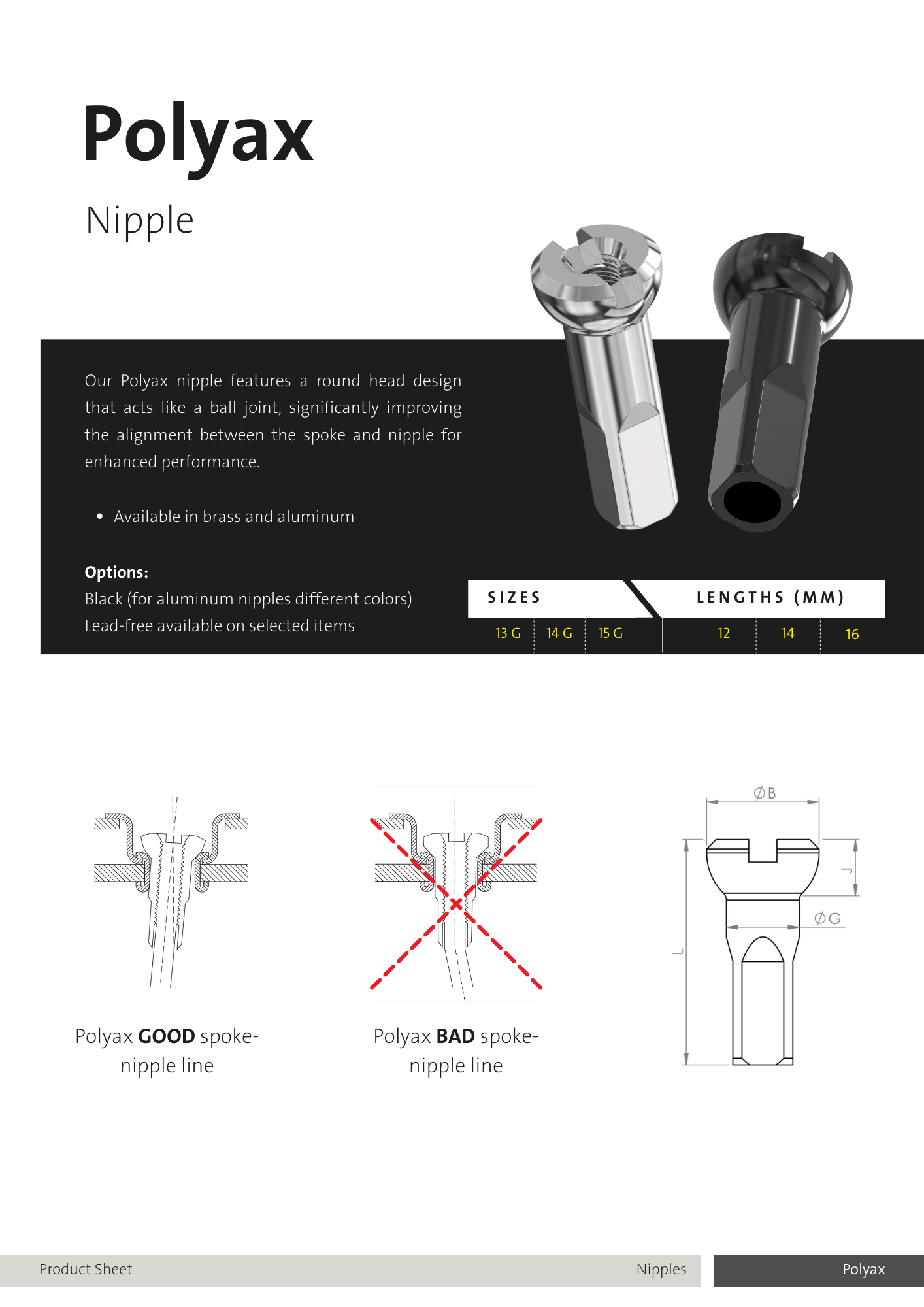
- DT Pro Lock Fluid Integration (High-Vibration Builds): For configurations requiring a permanent anaerobic seal, we utilize DT Swiss Pro Lock nipples, executing the entire tensioning and stabilization structure while the chemical compound remains wet.
3. Rejecting Hydraulic Shortcuts: The Multi-Day Stress Relief
Many commercial and boutique builders rely on massive hydraulic pre-stressing presses, slamming tons of sudden, violent pressure onto a freshly laced wheel to instantly force components into place. We completely reject this destructive factory shortcut:
- Protecting the Components: Slamming a carbon rim with violent hydraulic shock introduces microscopic fractures into the epoxy resin matrix around the spoke holes, weakening the rim bed before it ever hits the road. Furthermore, shunting tons of shock compresses stainless steel spoke past its elastic limit, creating hidden stress fractures that drastically shorten fatigue life.
- Natural Material Creep Relaxation: Instead of forcing materials into submission with raw power, we rely on the natural physics of material creep relaxation. Once laced, the wheel is brought to tension and left to rest on a rack for a 24-hour stabilization cycle. This allows the carbon rim bed to naturally relax under load and lets the ball head nipples mate flawlessly with the 4D drilled carbon holes.
- Repeated Stabilization Cycles: We re tension, true, and repeat this resting process over multiple days until the spoke tension is completely and permanently locked in.
B'Spoke Wheel Warranty & Guarantee
When you ride a custom wheelset built by Andy Choy, you aren’t paying for corporate marketing insurance or mass-produced factory shortcuts. You are investing in a decades-proven, zero-compromise engineering
- Standard Wheelsets: Features a 120 kg rider weight limit. Rather than testing our custom builds on a featherweight 60 kg pro rider, we torture-test our lightest wheels in the field using a dedicated 120 kg test pilot, ensuring an unmatched safety and durability mar
gin. - E-Bike Wheelsets: Features a 130 kg total system weight limit (combined rider and bike mass). Because heavy e-bikes subject components to immense sustained motor torque and high baseline vehicle weight, we apply this specific threshold to guarantee long-term structural integrity under high-power motor assis
tance.
1. Lifetime "No Broken Spoke" & "Not Out of True" Guarantee
We guarantee every custom wheelset against spoke breakage and tension loss for its entire operational lifespan under our specified weight limits (120 kg sta
Note: Warranty service is Return-To-Base and requires the tyre and tubeless sealant to be completely removed beforehand.
2. 3-Year Carbon Rim Warranty & Tyre Pressure Compliance
Every premium carbon rim structural matrix is fully backed by a 3-year structural warranty against manufacturing defects, provided the wheelset is operated within correct technical parameters.
- Tyre Pressu
re & Seating Limits: When mounting tubeless tyres, initial inflation to seat the bead must never exceed 10% to 15% above the calculator-recommended target pressure. Once the tyre bead audibly seats into the rim retention shelf, the pressure must be immediately released down to the exact calculator-recommended riding level. - Mandatory Compatibility & Abort Rule: Tubeless systems rely on strict dimensional tolerances. If a tyre bead fails to seat properly under normal installation pressures, the tyre is incompatible and installation must be aborted immediately. Forcing an unseated bead with excessive pressure (such as attempting to inflate up to 140 PSI) creates extreme radial stress and is a severe safety hazard.
- Exclusions: Warranty coverage strictly excludes damage caused by exceeding pressure limits, failing to reduce pressure after bead seating, forcing incompatible tyre/rim combinations, or running unseated bead explosions.
- Calculated Pressure Standard: Riders must determine operational and seating pressures exclusively by utilizing trusted tools such as the Silca or Zipp Tyre Pressure Calculators, matching the exact combined weight of the rider, bike, and gear alongside the true measured tyre width.
3. Lifetime Half-Price Crash & Accident Replacement (Labour-Free)
Real-world riding carries real-world risks. If you crash, case a jump, or suffer a severe accident outside of standard warranty conditions that damages or breaks a rim, we stand by our ri
- Half-Price Rim: We will replace the damaged rim at 50% of the retail price.
- Zero Labour Cost: We will perform the complete wheel rebuild entirely labour-free.
4. Hub Warranty
- House-Brand Hubs: Fully covered by a 3-year warranty against manufacturing and structural defects. Bearings are classified as normal wear-and-tear items and are excluded from warranty coverage.
- Third-Party Hubs: Covered directly in accordance with the original manufacturer's specified warranty windows (e.g., DT Swiss, Hope, etc.), backed fully by our local supply line.